Hcl Printer Drivers For Mac
I recently purchased a new Epson AIO inkjet printer, the 2014 WF-4630. Overall, I couldn’t be more pleased with it.
It’s fast, versatile and produces superb output. I had only one problem with the printer. And finding the solution to it led me down a road that is relevant to the owner of almost any printer on the market today. The printer’s setup was easy. In fact, to connect to and use the printer over Wi-Fi, you don’t have to install any new software.
This PCL5 driver version of the Xerox Global Print Driver uses the Windows Add Printer wizard and should be used if your security policies prohibit downloading the 'Install from Web' driver package.
Download Printer Drivers For Mac
- See if your printer is supported with your Mac and learn how to install the driver.
- Login Register OpenPrinting Database Printers Drivers FAQ Foomatic Articles Projects Documentation Developers The Linux Foundation.
The printer driver shows up in the Printers & Scanners Preferences pane automatically. Still, I installed Epson’s software (downloaded from their website) so that I had access to updated printer firmware and other printer-specific utilities (such as for scanning). This didn’t change the selected Epson printer driver, but it did add other software to my Applications folder. I thought I was done. And I was—until I wanted to fiddle with the printer’s color settings. I knew to expect a Color Options item in the Print dialog’s menu.
The printer’s manual confirmed this. But I couldn’t find any such item. I subsequently noticed that several other printer-specific settings were similarly missing. What was going on? It was time for some troubleshooting. In search of a solution My first thought: Perhaps I wasn’t using the latest printer software. I knew not to depend on any software included on the CD that came with the printer, as it could already be obsolete.
But I had already installed the latest software and updated firmware from the Epson website, so I was confident that this was not the problem. Epson’s Software Updater utility offers a firmware update. I installed it. Next, I launched OS X’s App Store and checked for updates.
Here I found an entirely separate Epson Printer Software Update 2.18. I installed this as well. But none of that helped: Color Options was still missing. I deleted and reinstalled the printer driver from System Preferences’ Printers & Scanners—still to no avail.
Apple’s Software Update offers an Epson update. To be clear, none of this prevented me from using the printer.
As long as I was willing to ignore the absence of Color Options, I could print just fine. However, I did not want to just ignore the problem. Eventually, I contacted Epson support. They provided the solution. It was one that I should have known, as I had previously confronted a similar situation with my HP laser printer: I needed to switch drivers. Because, as it turns out, for most printers today, you have a choice of two different printer drivers. The first driver is maintained by Apple (in conjunction with the printer vendor presumably) as part of OS X.
This is the one that you update via OS X’s App Store. It’s also the one that appears automatically by default if you don’t install any vendor-specific software. You can typically identify this driver because it will have -AirPrint at the end of its name, indicating its compatibility with this OS X printing feature. An confirmed this: “If the printer is AirPrint-compatible, OS X adds it without downloading and installing any additional software.” This is the driver that I was using. The second driver is the one that is obtained from the vendor directly, as I did when I went to Epson’s website.
The problem is that only this vendor-specific driver offers support for all of the printer’s features. I was still using the Apple-supplied driver because simply downloading and installing the software from the printer vendor’s website does not change the selection in System Preferences. This is why Color Options was missing from my Print dialogs.
Adding to the confusion, nothing I found in any printer documentation from Epson made this distinction clear. Apple does mention this, but it’s buried in: “OS X automatically uses AirPrintwhen you add the printer. Ifthe Print dialog doesn’t have settings for all its features, you need to change its setup.” Unless you discovered this article and understood its implications, you would likely have no idea that such a choice was even available.
Assuming you find yourself in this (or similar) situation, the solution, as stated by Apple, is to switch to the vendor-specific driver. Solution found Let’s start by assuming you are currently using Apple’s AirPrint driver, but that you have also installed the vendor’s latest printer software. Let’s further assume that your Mac is via your network using Wi-Fi or via a LAN port on your AirPort device using ethernet, not a direct USB connection. That said, we’re ready to roll. Go to System Preferences and select Printers & Scanners.
Select the printer from the Printers list on the left. In the Location section to the right, the Kind item name should end in -AirPrint. Epson’s AirPrint driver is currently selected. While you could ultimately keep both drivers, allowing you to switch back and forth as desired, let’s assume you just want to keep the more full-featured one. To do so, click the minus (-) button at the bottom of the Printer’s list to delete the current driver. Now select the plus (+) button.
From the pop-up menu that appears, check the Nearby Printers list. Chances are good that your printer will be there. Installing this driver will reinstall the unwanted AirPrint driver. The Epson printer shows up in the Nearby Printer’s list.
Ignore this to avoid installing the AirPrint driver. Instead, select Add Printer or Scanner. In the Add window that opens, your printer should be listed. If so, select it this time.
But don’t hit Add yet. We’re still not quite done. Check the Use item at the bottom. It will probably say AirPrint or Secure AirPrint.
Again, this is not want you want. This is essentially the same as selecting the AirPrint driver from the Nearby Printers list. Instead, click the item to get the pop-up menu to appear; select the item that is name of the printer ( Epson WF-4630 Series, in my case). In the unlikely case that the printer name is not found, choose Select Software; ideally, you’ll find the name of the printer in this more extended list. If so, select it. Selecting the Epson printer from Printer & Scanner’s Add window.
Now click the Add button. This selects the vendor’s printer-specific driver software (that you presumably previously downloaded and installed). Finally, open the Print dialog for a document. The vendor-specific options should at last appear. In my case, the previously missing Color Options did finally show up as expected. In case you’re wondering, the vendor-specific Epson driver still allows printing over Wi-Fi.
AirPrint is really only relevant for iOS devices. And my iOS devices worked with the printer, via AirPrint, regardless of the printer driver employed by my Mac.
All was now well.
During the 2000's and early '10's I worked in various IT departments. I still experience a small shiver down my spine and get a twitch in my eye when reminiscing about my days in corporate IT trying to give various network service support to my macOS clients in a Microsoft Windows-dominated world. While most services on macOS had analogues for their Windows counterparts, printing on the big copier/printer/scanner machines proved much more tasking.
Sure postscript might work depending on the copier (and that thanks was owed to from the open source world) but for our very few Mac users, printing onto machines designed to only work for Windows clients (our CFO found them to be much cheaper) was quite trying. But we managed it, and that's because regardless of what special features or doodads a printer may have, the underlying mechanism and functions are all the same. It's using this same principle that just might help you get your printer to work under macOS. Printing from macOS Today with AirPrint and more ubiquitous macOS support you can just about print to any printer you can buy on the market. However, there still exist some printers that support Windows only clients. I for example have an older HP 1018 printer of which there is no official macOS support.
But fret not! You just might be able to find a printer driver that is 'close enough' for your printer to make it recognized on macOS. Here's how I got my HP 1018 laserjet printer to work. Download and install the latest supported driver from HP First, you'll need to get the latest drivers for all of the officially supported HP printers for macOS. Not from HP, but from Apple. Navigate with Safari to the.
Click Download. Use Finder to navigate to your downloads. Double click the HewlettPackardPrinterDrivers5.1.dmg file. Double click the HewlettPackardPrinterDrivers package. Click Continue. Once again click Continue.
Click Agree to the license agreement. Click Install. Enter your password. Click on Install Software.
Click done. Set up your printer with the closest match Luckily for us, HP tends to name it's various printers with similar feature sets with similar model numbers.
So, for example, since I have an HP laserjet 1018 printer, I know that a similarly named HP laserjet like the HP laserjet 1010 or the may share some features with my 1018. So we try to find a best match by iteration until we get the features we absolutely want to work.
Note that you may just only get printing working but extra features like duplexing or scanning might not function. But at least you can print. These instructions assume your printer is powered up and connected as expected by the manufacturer. Go to System Preferences.
Select Printers & Scanners. Select the unsupported printer from the list. Select Choose a Driver from the drop down list. Click Select Software. Search for a similarly named printer as yours. I have an HP laserjet 1018.
I found other HP printers like the 1010, 1012, 1015 and 1022. Try to ensure that you get as close a match as possible.
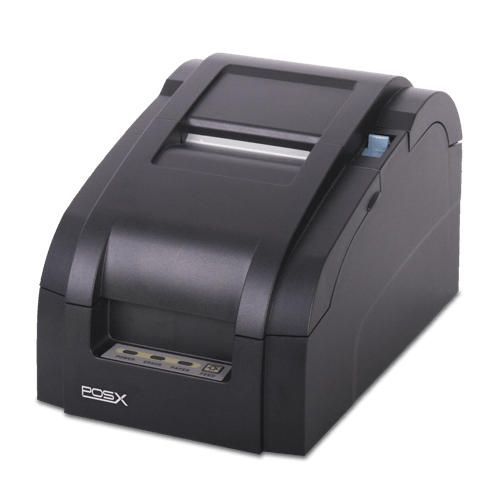
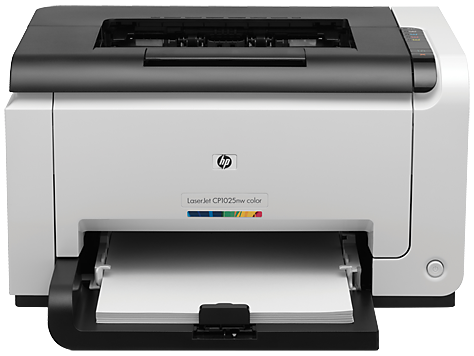
Now we iterate. The plan is to try the first closest matching printer. Select that closest driver from the list. Open up any text program or webpage and try to print a test page. If it works you're done! Otherwise you need to keep on iterating. Delete the printer by clicking.
Repeat steps 3 - 11 with the next similarly named printer model. In my case the printer for HP laserjet 1022 worked. Final comments As with any hack, success with this 'close enough' strategy will vary by printer and by manufacturer.
I also have to live with ignoring some the of the options that come with the 1022 that don't exist on my 1018 in the print dialogs when I print something. Working printer.
Or, you can just buy a Mac supported printer like the. What about you? Have a hack or tweak you want to mention? Lets know in the comments!