Koritenje Proizvoda Ibm Connections For Mac
- Koristenje Proizvoda Ibm Connections For Mac 2017
- Koristenje Proizvoda Ibm Connections For Mac Os X 10.6.8
Table of contents IBM z/OS Connect Enterprise Edition (EE) V3.0 delivers a number of new, key enhancements that include:. The z/OS® Connect EE API toolkit, which adds a new type of project for services to complement the API projects. This enables the end-to-end creation of z/OS Connect EE API and dependent services from within the same Eclipse-based environment. A consistent user experience for the creation of both CICS® and IMS services. The new service project is extensible for use by other service providers through the programming interfaces common to the z/OS Connect EE build toolkit.
The introduction of the Service Interface Editor. This increases the number of eligible z/OS-based applications that can be API-enabled, to include those with complex data structures by using COBOL REDEFINES and OCCURS DEPENDING ON clauses, and PL/I REFER.
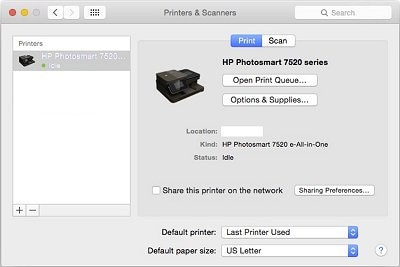
This document is for HP multifunction printers connected to a Mac computer with a. Ports on the computer, then use a different USB cable to connect the printer. IBM z™/OS Connect Enterprise Edition (EE) V3.0 delivers a number of new, key enhancements that include: The z/OS® Connect EE API toolkit, which adds a new type of project for services to complement the API projects.
The ability to use the Service Interface Editor to enable the creator of the service project to perform renaming, redaction, and remarking for data fields that are used at the service level. This encapsulates the unique working knowledge of the target business logic that can greatly assist API creators to understand and leverage the true value of underlying services. The dynamic deployment and update of z/OS Connect EE services, APIs, and configuration, to be automatically refreshed as fast as needed for the environment, or upon request by a system administrator. A new CICS service provider that enables the use of IP interconnectivity (IPIC) from stand-alone z/OS Connect EE servers, or optimised direct links when z/OS Connect EE is deployed to a CICS Liberty JVM server. Full CICS channel and container program interoperation, by using the new CICS service provider.
This includes support for multiple containers of either BIT or CHAR type and further expands the applications that can be API enabled. Support for programs that are written in COBOL or PL/I, which run in IMS with data structures that exceed traditional message segment limits, to allow more applications to be API enabled. Integration with IBM API Connect for enterprise-class API management, to include consumer registration, API security controls, and version control. The adoption of a continuous delivery (CD) support model for z/OS Connect EE V3.0. IBM z/OS Connect Enterprise Edition (EE), V3.0 uses the continuous delivery (CD) support model. This new version increases the number of IBM z/OS applications that can be API-enabled, in one of three ways:.
The Eclipse-based z/OS Connect EE API toolkit supports the creation of z/OS Connect EE services, and may be used in API-enablement of applications that have more complex data structures. Examples of the supported structures are COBOL copy books that have declarative statements, such as REDEFINES and OCCURS DEPENDING ON, and use of REFER in PL/I. For both COBOL and PL/I applications in an IBM® IMS environment, support is now included for large data structures that go beyond traditional message segment limits. The new IBM CICS Service Provider supports multiple CICS containers:.
Includes any mix of BIT- and CHAR-type container. Exploits IP interconnectivity (IPIC) for cross-LPAR connectivity. Charlotte olympia collection for m a cosmic. Z/OS Connect EE V3.0 improves the productivity of an API developer. Both API and service artifacts for CICS and IMS can be created in the new z/OS Connect EE API toolkit.
A consistent developer experience is provided to speed up the creation of APIs. When services are defined, they can now be dynamically deployed as Service ARchive (SAR) files, which allow APIs to use them immediately. The creator of the service can also annotate fields with remarks to capture knowledge that is likely esoteric to the target business logic, rename, or redact data fields that are used in those services. These new functions provide an easier method to build consumer-friendly APIs for z/OS applications.
The option to create and deploy CICS and IMS services as SAR files eliminates the requirement for specific per-service entries in a z/OS Connect EE server configuration file. Environmental dependencies to specific runtime resources are resolved through the use of symbolic references at runtime.
The new CICS service provider adopts the standard CICS intersystem communications protocol, IPIC from z/OS Connect EE servers, or an optimised direct link when z/OS Connect EE is deployed to a CICS Liberty JVM server. The common IPIC protocol over TCP/IP is used in most CICS environments today and is able to exploit on-going, in-logical partition (LPAR) and cross-LPAR optimizations through z/OS Communications Server, for both networking and cryptographic hardware. Fast local sockets offer highly optimised cross-memory exploitation when both endpoints are within the same LPAR, transparent exploitation of hardware, such as RDMA over Converged Ethernet (RoCE), in cross-CEC configurations, and Shared Memory Communication-Direct (SMC-D) for cross-LPAR communication. Z/OS Connect EE V3.0 builds on z/OS Connect EE V2.0 and continues the capability to integrate with IBM API Connect to provide an end-to-end solution for API management and the creation of enterprise-wide APIs. Z/OS Connect EE V3.0 runtime requires IBM z/OS V2.1, or later, and one of the following:.
IBM 64-bit SDK for z/OS, Java Technology Edition V7.1.0. IBM 64-bit SDK for z/OS, Java Technology Edition V8.0.0 z/OS Connect EE V3.0 workstation tooling requires IBM Explorer for z/OS V3.1 Aqua.
For further details, refer to the and sections. June 16, 2017 Refer to the section for national language availability. Cloud and mobile applications reshape the way enterprises and systems interact. RESTful APIs that use JSON message formats are the predominate standards for new application development.
Koristenje Proizvoda Ibm Connections For Mac 2017
Enterprises with critical business functions on z/OS, or critical data on z/OS, can benefit from these new standards. As z/OS subsystems participate in these new application development standards, the usage of z/OS-based services and data can be seamless to application developers, with the potential to increase the speed of development. Z/OS Connect EE V3.0 provides a consistent, standards-based, API interface to z/OS subsystems and the applications that run on z/OS. Z/OS Connect EE V3.0 consists of two major components:. An Eclipse-based API toolkit user interface. z/OS Connect EE runtime Eclipse-based API toolkit user interface The z/OS Connect EE V3.0 API toolkit works independently of specific z/OS subsystems.
It is designed to work with IBM Explorer for z/OS Aqua, and associated offerings. The toolkit's user interface is used for the composition of services and z/OS RESTful APIs. The API composition tasks include the development of:. Service projects that encapsulate a specific usage of a target z/OS-based asset. API projects that define the external API and its relationship with underlying services Service and API projects become deployable units as Service ARchive (SAR) and API ARchive files respectively, with the API that include the Open API 2.0 document (formerly known as Swagger Specification 2.0). The user interface is designed to be intuitive for a z/OS developer who is familiar with RESTful API concepts. Behind each API definition, the JSON request-response schema associated with a specific HTTP method (GET, POST, PUT, and DELETE) can be mapped to an associated z/OS Connect EE service.
In combination with values from the HTTP headers, field values can be passed-through as-is, moved, omitted, or set to a default value, and taken together to form an API mapping model. The API mapping model provides a powerful degree of separation between the mobile or cloud application view of the API, and the underlying z/OS subsystem assets. This model has the potential to allow many independent APIs to concurrently exploit common underlying assets, while maintaining the ability to evolve each one at their own rate. In combination with the API mapping model, z/OS Connect EE V3.0 provides for the transformation of JSON data to the common format of z/OS subsystems. Together, the API mapping model and the transformation functions can help to improve the productivity of the z/OS developer in the creation of RESTful APIs. Initially offering a consistent user experience for the creation of both CICS and IMS services, the new service project is extensible for use by other service providers through the programming interfaces common to the z/OS Connect EE build toolkit. The new service project introduces the Service Interface Editor, which increases the number of eligible z/OS-based applications that can be API-enabled.
These applications include those with complex data structures using COBOL REDEFINES and OCCURS DEPENDING ON clauses, and PL/I REFER. The Service Interface Editor enables the creator of the service project to perform renaming, redaction, and remarking for data fields that are used at the service level. This encapsulates the unique working knowledge of the target business logic. This in turn can greatly assist API creators to understand and leverage the true value of underlying services. The z/OS Connect EE tooling allows the API developer to manage the lifecycle of both service and API project sources under change control, and distribute the deployable units by using standard software distribution methods. In the dynamic API services market, it is important for z/OS subsystems to support RESTful APIs and to do so in a timely fashion.
Z/OS Connect EE V3.0 runtime Deployable service and API files are stored on the z/OS UNIX file system, accessible from the LPAR where z/OS Connect EE will run; referred to as the 'runtime'. Z/OS Connect EE V3.0 is configured to locate and install these deployable service and API file resources during initialization. Z/OS Connect EE APIs depend on their underlying services.
Deployable services have just enough information for their environmental dependencies to be resolved at run-time. This enables deployable assets to be promoted as-is from a development environment, through test, quality assurance, and then on to production in an unmodified state. This promotion assumes that the quality criteria is met at each stage. In addition to creating RESTful APIs on z/OS, a standard Open API 2.0 description is also produced. This description provides portability of the API specifications to other systems that require instructions on how to invoke a RESTful API. IBM API Connect is an enterprise API management product.
It can discover z/OS Connect EE APIs and their associated Open API 2.0 descriptions to dynamically build a catalogue of z/OS-based API services. The z/OS Connect EE V3.0 runtime also provides the following capabilities in support of APIs as a first-class resource:. Security support through the z/OS System Authorization Facility (SAF). This validates that any requests for API calls are by authorized users, groups, or calling applications. Request-level logging of JSON payloads, including request and response data. Both System Management Facility (SMF) and file system logging options are available.
SMF records are used for reporting on z/OS Connect EE V3.0 usage. Z/OS Connect EE open beta program An is available. Clients can evaluate and experiment with potentially new z/OS Connect EE capabilities and provide feedback to IBM. At the time of announcement, the z/OS Connect EE open beta offering provides the ability to enable z/OS applications to be API Requesters to APIs either on z/OS or outside of z/OS, such as a cloud-based API. Accessibility by people with disabilities A US Section 508 Voluntary Product Accessibility Template (VPAT), containing details about accessibility compliance, can be found on the website.
Value Unit-based pricing Value Unit pricing for eligible IBM z Systems IBM International Program License Agreement (IPLA) programs enables a lower cost of incremental growth and enterprise aggregation. Each z Systems IPLA product with Value Unit pricing has a single price per Value Unit and a conversion matrix, called Value Unit Exhibit, for converting from some designated measurement to Value Units.
Z/OS Connect Enterprise Edition uses the measurement Simultaneous Instances, which are required to be converted to Value Units. One Simultaneous Instance is equivalent to one started address space within the enterprise. The aggregated maximum number of Simultaneous Instances required by the enterprise is the measurement required to convert to Value Units using VUE038.
Value Unit pricing offers price benefits for you. For each z Systems IPLA program with Value Unit pricing, the quantity of that program needed to satisfy applicable IBM terms and conditions is referred to as the required license capacity. Each of the various Value Unit Exhibits stipulate that the larger your required license capacity, the fewer Value Units per Simultaneous Instance you will need. Value Unit Exhibits are uniquely identified by a three digit code and referred to using the nomenclature VUExxx, where xxx is the three digit code. The Value Unit Exhibit used for z/OS Connect Enterprise Edition V3.0 is VUE038. Subsequent acquisitions of Value Unit priced programs offer additional price benefits. The quantity of each z Systems IPLA program that you have acquired is referred to as entitled license capacity.
If you wish to grow your entitled license capacity for a z Systems IPLA program, the calculation to determine additional needed Value Units is based upon the number of Value Units already acquired. For each z Systems IPLA program with Value Unit pricing, you should:. Determine the required license capacity, in Simultaneous Instances. Aggregate the Simultaneous Instances across the enterprise. Convert the total Simultaneous Instances to Value Units, using the applicable Value Unit Exhibit. Multiply the price per Value Unit by the total number of Value Units to determine the total cost. To simplify conversion from the designated measurement to Value Units or vice-versa, use the Value Unit Converter Tool.
For additional information or to obtain a copy of the Value Unit Converter Tool, visit the Value Unit Converter Tool, go to the website. Note that Value Units of a given product cannot be exchanged, interchanged, or aggregated with Value Units of another product. To determine the required license capacity for the z Systems IPLA program you selected, refer to the section. IBM makes the following statements of general direction:. IBM intends that a future release of IBM z/OS Connect Enterprise Edition will provide the ability for IBM z/OS subsystems to become consumers of REST/JavaScript Object Notation (JSON) Open APIs. IBM intends that IBM z/OS Connect Enterprise Edition and IBM API Connect will deliver tighter integration, with the ability to publish REST APIs directly into API Connect.
IBM's statements regarding its plans, directions, and intent are subject to change or withdrawal without notice at IBM's sole discretion. Information regarding potential future products is intended to outline our general product direction and it should not be relied on in making a purchasing decision.
The information mentioned regarding potential future products is not a commitment, promise, or legal obligation to deliver any material, code, or functionality. Information about potential future products may not be incorporated into any contract. The development, release, and timing of any future features or functionality described for our products remain at our sole discretion.
For information on the IBM continuous delivery support model, refer to Software Announcement, dated May 24, 2016. For information on IBM DB2® 12.1 for z/OS, refer to Software Announcement, dated October 4, 2016. For information on IBM DB2 Accessories Suite for z/OS V4.1, refer to Software Announcement, dated October 4, 2016.
For information on IBM Explorer for z/OS, V3.0, refer to Software Announcement, dated October 5, 2015. For information on IBM Operations Analytics for z Systems V3.1, refer to Software Announcement, dated September 13, 2016. For information on IMS 14, refer to Software Announcement, dated October 5, 2015. For information on WebSphere® Application Server, V9.0, refer to Software Announcement, dated June 7, 2016. Description Availability date Language z/OS Connect EE, V3.0 June 16, 2017. English.
Koristenje Proizvoda Ibm Connections For Mac Os X 10.6.8
English. French. German. Hungarian. Italian. Polish. Portuguese (Brazil).
Romanian. Russian. Spanish Translation information, if available, can be found at the website. Program number VRM Program name 5655-CE3 3.0.0 IBM z/OS Connect Enterprise Edition 5655-CE4 1.1.0 IBM z/OS Connect Enterprise Edition S&S Product identification number Program PID number Subscription and Support PID number 5655-CE3 5655-CE4 Product information is available on the website. Z/OS Connect EE V3.0 product documentation is provided in two ways:.
On-line, through IBM Knowledge Center. For the workstation-based tooling, as integrated help On-line information in IBM Knowledge Center On-line documentation for z/OS Connect EE is hosted in IBM Knowledge Center, which provides integrated tools for finding, filtering, customizing, saving, and sharing information. For the z/OS Connect EE product documentation in Integrated help z/OS Connect EE provides workstation-based tooling for creating RESTful APIs. The documentation that is needed to use this tooling is integrated as on-line help. This information can be accessed by selecting 'Help' in the tooling. Other z/OS Connect EE publications Other publications for z/OS Connect EE V3.0 are on-line.
Publication Form number z/OS Connect EE V3.0 Program directory GI13-4414 Software Services IBM Software Services has the breadth, depth, and reach to manage your services needs. You can leverage the deep technical skills of our lab-based, software services team and the business consulting, project management, and infrastructure expertise of our IBM Global Services team. Also, we extend our IBM Software Services reach through IBM Business Partners to provide an extensive portfolio of capabilities. Together, we provide the global reach, intellectual capital, industry insight, and technology leadership to support a wide range of critical business needs. To learn more about IBM Software Services, contact your Lab Services Sales or Delivery Leader. Specified operating environment Hardware requirements z/OS Connect EE V3.0 runs on any machine that supports the required, supported, operating systems.
Software requirements z/OS Connect EE V3.0 runtime requires IBM z/OS V2.1, or later, and one of the following:. IBM 64-bit SDK for z/OS, Java Technology Edition V7.1.0.
IBM 64-bit SDK for z/OS, Java Technology Edition V8.0.0 z/OS Connect EE V3.0 workstation tooling requires IBM Explorer for z/OS V3.1 Aqua. For the most up-to-date information of the specified operating environments for z/OS Connect EE V3.0, go to the IBM Electronic Support The IBM Support Portal is your gateway to technical support. This includes IBM Electronic Support tools and resources, for software and hardware, to help save time and simplify support. The Electronic Support tools can help you find answers to questions, download fixes, troubleshoot, automate data collection, submit and track problems through the Service Request on-line tool, and build skills.
All these tools are made available through your IBM support agreement. Read about the Electronic Support portfolio of tools on the website. You can also access the page and the on-line tool for more support. User Group requirements Requirements for z/OS Connect EE can be created, viewed, and voted for in the community.
Table of contents IBM z/OS Connect Enterprise Edition (EE) V3.0 delivers a number of new, key enhancements that include:. The z/OS® Connect EE API toolkit, which adds a new type of project for services to complement the API projects. This enables the end-to-end creation of z/OS Connect EE API and dependent services from within the same Eclipse-based environment. A consistent user experience for the creation of both CICS® and IMS services. The new service project is extensible for use by other service providers through the programming interfaces common to the z/OS Connect EE build toolkit. The introduction of the Service Interface Editor. This increases the number of eligible z/OS-based applications that can be API-enabled, to include those with complex data structures by using COBOL REDEFINES and OCCURS DEPENDING ON clauses, and PL/I REFER.
The ability to use the Service Interface Editor to enable the creator of the service project to perform renaming, redaction, and remarking for data fields that are used at the service level. This encapsulates the unique working knowledge of the target business logic that can greatly assist API creators to understand and leverage the true value of underlying services. The dynamic deployment and update of z/OS Connect EE services, APIs, and configuration, to be automatically refreshed as fast as needed for the environment, or upon request by a system administrator. A new CICS service provider that enables the use of IP interconnectivity (IPIC) from stand-alone z/OS Connect EE servers, or optimized direct links when z/OS Connect EE is deployed to a CICS Liberty JVM server. Full CICS channel and container program interoperation, by using the new CICS service provider.
This includes support for multiple containers of either BIT or CHAR type and further expands the applications that can be API enabled. Support for programs that are written in COBOL or PL/I, which run in IMS with data structures that exceed traditional message segment limits, to allow more applications to be API enabled. Integration with IBM API Connect for enterprise-class API management, to include consumer registration, API security controls, and version control. The adoption of a continuous delivery (CD) support model for z/OS Connect EE V3.0.
IBM z/OS Connect Enterprise Edition (EE), V3.0 uses the continuous delivery (CD) support model. This new version increases the number of IBM z/OS applications that can be API-enabled, in one of three ways:. The Eclipse-based z/OS Connect EE API toolkit supports the creation of z/OS Connect EE services, and may be used in API-enablement of applications that have more complex data structures. Examples of the supported structures are COBOL copy books that have declarative statements, such as REDEFINES and OCCURS DEPENDING ON, and use of REFER in PL/I. For both COBOL and PL/I applications in an IBM® IMS environment, support is now included for large data structures that go beyond traditional message segment limits.
The new IBM CICS Service Provider supports multiple CICS containers:. Includes any mix of BIT- and CHAR-type container. Exploits IP interconnectivity (IPIC) for cross-LPAR connectivity. Z/OS Connect EE V3.0 improves the productivity of an API developer. Both API and service artifacts for CICS and IMS can be created in the new z/OS Connect EE API toolkit.
A consistent developer experience is provided to speed up the creation of APIs. When services are defined, they can now be dynamically deployed as Service ARchive (SAR) files, which allow APIs to use them immediately. The creator of the service can also annotate fields with remarks to capture knowledge that is likely esoteric to the target business logic, rename, or redact data fields that are used in those services. These new functions provide an easier method to build consumer-friendly APIs for z/OS applications. The option to create and deploy CICS and IMS services as SAR files eliminates the requirement for specific per-service entries in a z/OS Connect EE server configuration file.
Environmental dependencies to specific runtime resources are resolved through the use of symbolic references at runtime. The new CICS service provider adopts the standard CICS intersystem communications protocol, IPIC from z/OS Connect EE servers, or an optimized direct link when z/OS Connect EE is deployed to a CICS Liberty JVM server. The common IPIC protocol over TCP/IP is used in most CICS environments today and is able to exploit on-going, in-logical partition (LPAR) and cross-LPAR optimizations through z/OS Communications Server, for both networking and cryptographic hardware. Fast local sockets offer highly optimized cross-memory exploitation when both endpoints are within the same LPAR, transparent exploitation of hardware, such as RDMA over Converged Ethernet (RoCE), in cross-CEC configurations, and Shared Memory Communication-Direct (SMC-D) for cross-LPAR communication. Z/OS Connect EE V3.0 builds on z/OS Connect EE V2.0 and continues the capability to integrate with IBM API Connect to provide an end-to-end solution for API management and the creation of enterprise-wide APIs.
Z/OS Connect EE V3.0 runtime requires IBM z/OS V2.1, or later, and one of the following:. IBM 64-bit SDK for z/OS, Java Technology Edition V7.1.0. IBM 64-bit SDK for z/OS, Java Technology Edition V8.0.0 z/OS Connect EE V3.0 workstation tooling requires IBM Explorer for z/OS V3.1 Aqua. For further details, refer to the and sections. June 16, 2017 Refer to the section for national language availability.
Cloud and mobile applications reshape the way enterprises and systems interact. RESTful APIs that use JSON message formats are the predominate standards for new application development. Enterprises with critical business functions on z/OS, or critical data on z/OS, can benefit from these new standards. As z/OS subsystems participate in these new application development standards, the usage of z/OS-based services and data can be seamless to application developers, with the potential to increase the speed of development. Z/OS Connect EE V3.0 provides a consistent, standards-based, API interface to z/OS subsystems and the applications that run on z/OS. Z/OS Connect EE V3.0 consists of two major components:. An Eclipse-based API toolkit user interface.
z/OS Connect EE runtime Eclipse-based API toolkit user interface The z/OS Connect EE V3.0 API toolkit works independently of specific z/OS subsystems. It is designed to work with IBM Explorer for z/OS Aqua, and associated offerings. The toolkit's user interface is used for the composition of services and z/OS RESTful APIs. The API composition tasks include the development of:. Service projects that encapsulate a specific usage of a target z/OS-based asset. API projects that define the external API and its relationship with underlying services Service and API projects become deployable units as Service ARchive (SAR) and API ARchive files respectively, with the API that include the Open API 2.0 document (formerly known as Swagger Specification 2.0).
The user interface is designed to be intuitive for a z/OS developer who is familiar with RESTful API concepts. Behind each API definition, the JSON request-response schema associated with a specific HTTP method (GET, POST, PUT, and DELETE) can be mapped to an associated z/OS Connect EE service. In combination with values from the HTTP headers, field values can be passed-through as-is, moved, omitted, or set to a default value, and taken together to form an API mapping model. The API mapping model provides a powerful degree of separation between the mobile or cloud application view of the API, and the underlying z/OS subsystem assets.
This model has the potential to allow many independent APIs to concurrently exploit common underlying assets, while maintaining the ability to evolve each one at their own rate. In combination with the API mapping model, z/OS Connect EE V3.0 provides for the transformation of JSON data to the common format of z/OS subsystems.
Together, the API mapping model and the transformation functions can help to improve the productivity of the z/OS developer in the creation of RESTful APIs. Initially offering a consistent user experience for the creation of both CICS and IMS services, the new service project is extensible for use by other service providers through the programming interfaces common to the z/OS Connect EE build toolkit. The new service project introduces the Service Interface Editor, which increases the number of eligible z/OS-based applications that can be API-enabled. These applications include those with complex data structures using COBOL REDEFINES and OCCURS DEPENDING ON clauses, and PL/I REFER. The Service Interface Editor enables the creator of the service project to perform renaming, redaction, and remarking for data fields that are used at the service level.
This encapsulates the unique working knowledge of the target business logic. This in turn can greatly assist API creators to understand and leverage the true value of underlying services. The z/OS Connect EE tooling allows the API developer to manage the lifecycle of both service and API project sources under change control, and distribute the deployable units by using standard software distribution methods. In the dynamic API services market, it is important for z/OS subsystems to support RESTful APIs and to do so in a timely fashion. Z/OS Connect EE V3.0 runtime Deployable service and API files are stored on the z/OS UNIX file system, accessible from the LPAR where z/OS Connect EE will run; referred to as the 'runtime'. Z/OS Connect EE V3.0 is configured to locate and install these deployable service and API file resources during initialization.
Z/OS Connect EE APIs depend on their underlying services. Deployable services have just enough information for their environmental dependencies to be resolved at run-time.
This enables deployable assets to be promoted as-is from a development environment, through test, quality assurance, and then on to production in an unmodified state. This promotion assumes that the quality criteria is met at each stage. In addition to creating RESTful APIs on z/OS, a standard Open API 2.0 description is also produced.

This description provides portability of the API specifications to other systems that require instructions on how to invoke a RESTful API. IBM API Connect is an enterprise API management product. It can discover z/OS Connect EE APIs and their associated Open API 2.0 descriptions to dynamically build a catalog of z/OS-based API services. The z/OS Connect EE V3.0 runtime also provides the following capabilities in support of APIs as a first-class resource:. Security support through the z/OS System Authorization Facility (SAF).
This validates that any requests for API calls are by authorized users, groups, or calling applications. Request-level logging of JSON payloads, including request and response data. Both System Management Facility (SMF) and file system logging options are available. SMF records are used for reporting on z/OS Connect EE V3.0 usage. Z/OS Connect EE open beta program An is available. Clients can evaluate and experiment with potentially new z/OS Connect EE capabilities and provide feedback to IBM. At the time of announcement, the z/OS Connect EE open beta offering provides the ability to enable z/OS applications to be API Requesters to APIs either on z/OS or outside of z/OS, such as a cloud-based API.
Accessibility by people with disabilities A US Section 508 Voluntary Product Accessibility Template (VPAT), containing details about accessibility compliance, can be found on the website. Section 508 of the US Rehabilitation Act z/OS Connect EE V3.0 is capable, at general availability when used in accordance with associated IBM documentation, of satisfying the applicable requirements of Section 508 of the Rehabilitation Act, provided that any assistive technology used with the product properly interoperates with it. Value Unit-based pricing Value Unit pricing for eligible IBM z Systems IBM International Program License Agreement (IPLA) programs enables a lower cost of incremental growth and enterprise aggregation. Each z Systems IPLA product with Value Unit pricing has a single price per Value Unit and a conversion matrix, called Value Unit Exhibit, for converting from some designated measurement to Value Units.
Z/OS Connect Enterprise Edition uses the measurement Simultaneous Instances, which are required to be converted to Value Units. One Simultaneous Instance is equivalent to one started address space within the enterprise. The aggregated maximum number of Simultaneous Instances required by the enterprise is the measurement required to convert to Value Units using VUE038. Value Unit pricing offers price benefits for you. For each z Systems IPLA program with Value Unit pricing, the quantity of that program needed to satisfy applicable IBM terms and conditions is referred to as the required license capacity.
Each of the various Value Unit Exhibits stipulate that the larger your required license capacity, the fewer Value Units per Simultaneous Instance you will need. Value Unit Exhibits are uniquely identified by a three digit code and referred to using the nomenclature VUExxx, where xxx is the three digit code.
The Value Unit Exhibit used for z/OS Connect Enterprise Edition V3.0 is VUE038. Subsequent acquisitions of Value Unit priced programs offer additional price benefits. The quantity of each z Systems IPLA program that you have acquired is referred to as entitled license capacity. If you wish to grow your entitled license capacity for a z Systems IPLA program, the calculation to determine additional needed Value Units is based upon the number of Value Units already acquired. For each z Systems IPLA program with Value Unit pricing, you should:. Determine the required license capacity, in Simultaneous Instances.
Aggregate the Simultaneous Instances across the enterprise. Convert the total Simultaneous Instances to Value Units, using the applicable Value Unit Exhibit. Multiply the price per Value Unit by the total number of Value Units to determine the total cost. To simplify conversion from the designated measurement to Value Units or vice-versa, use the Value Unit Converter Tool. For additional information or to obtain a copy of the Value Unit Converter Tool, visit the Value Unit Converter Tool, go to the website.
Note that Value Units of a given product cannot be exchanged, interchanged, or aggregated with Value Units of another product. To determine the required license capacity for the z Systems IPLA program you selected, refer to the section. IBM makes the following statements of general direction:.
IBM intends that a future release of IBM z/OS Connect Enterprise Edition will provide the ability for IBM z/OS subsystems to become consumers of REST/JavaScript Object Notation (JSON) Open APIs. IBM intends that IBM z/OS Connect Enterprise Edition and IBM API Connect will deliver tighter integration, with the ability to publish REST APIs directly into API Connect. IBM's statements regarding its plans, directions, and intent are subject to change or withdrawal without notice at IBM's sole discretion.
Information regarding potential future products is intended to outline our general product direction and it should not be relied on in making a purchasing decision. The information mentioned regarding potential future products is not a commitment, promise, or legal obligation to deliver any material, code, or functionality. Information about potential future products may not be incorporated into any contract. The development, release, and timing of any future features or functionality described for our products remain at our sole discretion. For information on the IBM continuous delivery support model, refer to Software Announcement, dated May 24, 2016.
For information on IBM DB2® 12.1 for z/OS, refer to Software Announcement, dated October 4, 2016. For information on IBM DB2 Accessories Suite for z/OS V4.1, refer to Software Announcement, dated October 4, 2016. For information on IBM Explorer for z/OS, V3.0, refer to Software Announcement, dated October 5, 2015.
For information on IBM Operations Analytics for z Systems V3.1, refer to Software Announcement, dated September 13, 2016. For information on IMS 14, refer to Software Announcement, dated October 5, 2015. For information on WebSphere® Application Server, V9.0, refer to Software Announcement, dated June 7, 2016. Translation information, if available, can be found at the website. Program number VRM Program name 5655-CE3 3.0.0 IBM z/OS Connect Enterprise Edition 5655-CE4 1.1.0 IBM z/OS Connect Enterprise Edition S&S Product identification number Program PID number Subscription and Support PID number 5655-CE3 5655-CE4 Product information is available on the website. If you are a Direct Reseller - System Reseller acquiring products from IBM, you may link directly to for this announcement. A PartnerWorld ID and password are required (use IBMid).
Z/OS Connect EE V3.0 product documentation is provided in two ways:. Online, through IBM Knowledge Center. For the workstation-based tooling, as integrated help Online information in IBM Knowledge Center Online documentation for z/OS Connect EE is hosted in IBM Knowledge Center, which provides integrated tools for finding, filtering, customizing, saving, and sharing information. For the z/OS Connect EE product documentation in Integrated help z/OS Connect EE provides workstation-based tooling for creating RESTful APIs.
The documentation that is needed to use this tooling is integrated as online help. This information can be accessed by selecting 'Help' in the tooling. Other z/OS Connect EE publications Other publications for z/OS Connect EE V3.0 are online. Publication Form number z/OS Connect EE V3.0 Program directory GI13-4414 Software Services IBM Software Services has the breadth, depth, and reach to manage your services needs. You can leverage the deep technical skills of our lab-based, software services team and the business consulting, project management, and infrastructure expertise of our IBM Global Services team.
Also, we extend our IBM Software Services reach through IBM Business Partners to provide an extensive portfolio of capabilities. Together, we provide the global reach, intellectual capital, industry insight, and technology leadership to support a wide range of critical business needs. To learn more about IBM Software Services, contact your Lab Services Sales or Delivery Leader. Specified operating environment Hardware requirements z/OS Connect EE V3.0 runs on any machine that supports the required, supported, operating systems. Software requirements z/OS Connect EE V3.0 runtime requires IBM z/OS V2.1, or later, and one of the following:.
IBM 64-bit SDK for z/OS, Java Technology Edition V7.1.0. IBM 64-bit SDK for z/OS, Java Technology Edition V8.0.0 z/OS Connect EE V3.0 workstation tooling requires IBM Explorer for z/OS V3.1 Aqua. For the most up-to-date information of the specified operating environments for z/OS Connect EE V3.0, go to the IBM Electronic Support The IBM Support Portal is your gateway to technical support. This includes IBM Electronic Support tools and resources, for software and hardware, to help save time and simplify support.
The Electronic Support tools can help you find answers to questions, download fixes, troubleshoot, automate data collection, submit and track problems through the Service Request online tool, and build skills. All these tools are made available through your IBM support agreement. Read about the Electronic Support portfolio of tools on the website. You can also access the page and the online tool for more support. User Group requirements Requirements for z/OS Connect EE can be created, viewed, and voted for in the community.